• In 1965, Maxwell Smart, played by Don Adams, worked for the secret government agency CONTROL and battled the evil organization KAOS, foiling their schemes to take over the world. The juxtaposition of the two opposite states in the satirical spy series Get Smart probably had no bearing on Mutemath’s songs on their debut album, “Chaos” and “Control.” It’s more likely that these songs were born out of Christian themes from lead singer Paul Meany’s time in Earthsuit with Adam LaClave, the cowriter of these two songs. The New Orleans-based Alternative Rock band Mutemath released their debut album on September 26, 2006, after a lengthy legal battle with Warner Brothers Records, nearly a month after one of the most devastating hurricanes hit Mutemath’s hometown. With the chaos between the band and their label and the chaos at home, the album’s fourth track seems not only definite of 2006 but also a kind of harbinger for the economic collapse to come following the collapse of the housing market starting in 2007. 

    COMPLICATIONS: MY CLAIM TO FAME. Last year, “Recession Pop” trended on TikTok. The term refers to the mostly escapist pop music of the late ‘00s and early ’10s popular after the Great Recession impacted the world. The instillation of corporate bailouts left small business owners, including bands, with little money to pursue their art, but while rock and Alternative were scaling back, pop was full-blast in what seemed like an endless party. A 2009 interview with Lady Gaga in the Irish Independent called the new movement “Recession Pop,” though the term may have been used before the article’s publication. Most of this music wasn’t philosophy. Gaga’s 2009 Fame Monster single featuring BeyoncéTelephone” summed up the movement in the song’s chorus: “Stop calling / I don’t wanna think anymore / I left my heart and my head on the dance floor.” When the world pulled out of the recession, Gaga reemerged as a thinker and a multi-faceted musician. But as history repeats itself and trends come back, Lady Gaga is back with a new brand of Recession Pop on Mayhem, an album that blends the dark aesthetics of The Fame Monster and Born This Way, but with something even more unhinged. 

    I KNOW YOU STAY TRUE WHEN MY WORLD IS FALSE. Musical trends in the streaming era seem to be a bit of everything, everywhere, and all at once. In 2011, when Lady Gaga released “Heavy Metal Lover” on Born This Way, heavy metal felt so displaced from the rock music that had dominated even the pop charts as late as 2008. In 2025, Mayhem isn’t any more of a rock album, but the tracks sit more comfortably with my rock albums. Gaga is a lover of music as well as a master of creating a concept. The concept this time around is chaos and mayhem, something that music is moving toward with the growing uncertainty in the economy and global politics. The fact is that we all don’t want to think anymore—overthinking might bring us to a very dark place. We need a reprieve. That’s what I didn’t understand in college when I encountered Lady Gaga’s music for the first time. 

    EVERYTHING AROUND’S BREAKING DOWN TO CHAOS. Talking about Mutemath and Lady Gaga in the same post seems like a stretch. The former came out of evangelical charismatic Christianity and a favorite band among youth group kids, the latter a New York Italian-Catholic-born sex-positive pop star whom evangelicals have called a harlot, but it turns out that the band and the singer’s timeline and penchant for chaos aren’t the only common threads. On The Black Sheep Podcast, MUTEMATH drummer Darren King frankly attributed his frenetic drumming style to sexual frustration, claiming that he hadn’t ejaculated—except nocturnal emissions—before the age of 25 due to his internalizing of sexual shame in strict evangelical culture. While this could have been a TMI moment in the interview, I started to think about the contrast between Christian chastity and the so-called worldly permissiveness. The third track on Lady Gaga’s Mahem, “Garden of Eden” is far from a literal Genesis account of the fall of mankind. There’s a parallelism between the Biblical account, paradise, temptation, and suggestions of a fall from grace. But what the song offers is an escape from whatever is outside of the walls of the club. 

    I ALWAYS SEE YOU WHEN MY SIGHT IS LOST. When I was a young evangelical, I believed in drinking in moderation and that drunkenness caused sin, never getting lost in the pleasures of drinking, only taking the edge off the anxiety. But going to a strict Christian college and sticking with mostly philosophically liberal but conservative-in-practice Adventists, I didn’t drink alcohol until later, especially because it seemed I was always driving someone somewhere. In my late 20s, I discovered that drinking could help me get out of my head sometimes. There were times when I didn’t want to think anymore. Whether it’s drinking, sex, or creative expression, Christianity often breeds repression faith leaders try to corral youth into seemingly impossible ideas written over 2000 years ago. Christians are taught that there’s no room for error. Letting off steam can be a fall from grace. Taking a tour of Lady Gaga’s “Garden of Eden” for a weekend leads to a lifetime of regret. The problem is that there is a disturbing number of “wait until marriage” Evangelicals who end up with dissatisfied partners and divorce. Is there a healthy balance? Or is the chaos that Paul Meany sings about inevitable? 

    Read the lyrics of “Chaos” on Genius.

    Read the lyrics of “Garden of Eden” on Genius.
  • Twelve years ago, Korean-American singer Eric Nam’s debut EP Cloud Nine was released.After appearing on the music survival show Star Audition: Birth of a Great Star 2, Nam kickstarted his career as a K-pop solo act. Nam, knowing very little Korean at the beginning of his career, has talked about his dream to be a pop star in America, but without any example of a mainstream Asian pop star, Korea happened to be a starting point. Nam’s story is unique; however, K-pop has begun to launch Asian singers from Korean and other countries to fame outside of Asia. This month, we’re looking at a few examples of K-pop that was born both in and outside of Korea. These idols are pushing the boundaries of Korean music.

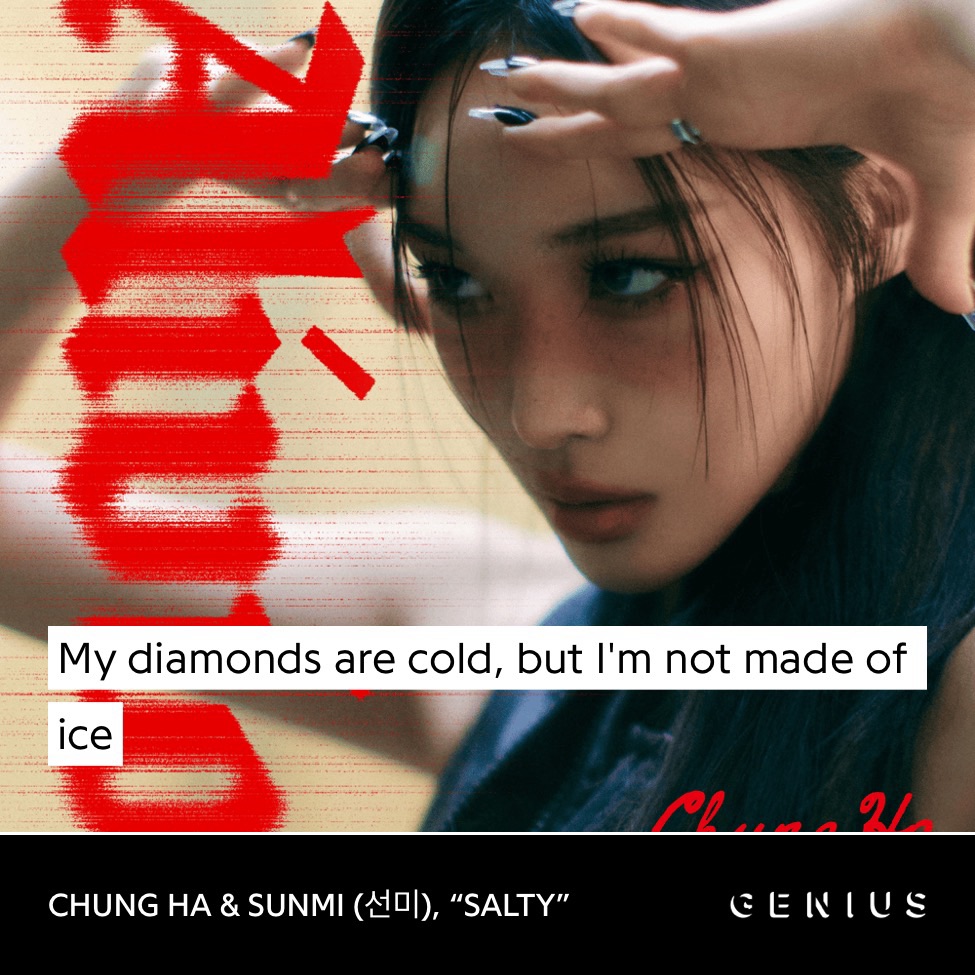
    I’M NO ALIEN, BIOLOGICAL. Last month, CHUNG HA released her fifth mini album Avilio. Four of the eight songs contain Korean lyrics, like the lead single “Stress,” and the other half of the songs are exclusively in English, including the second single “Salty,” which features Wonder Girls alumnus SUNMI. CHUNG HA, who spent her formative years in Dallas, Texas, is fluent in both English and Korean. Avilio’s underperformance on the Korean charts—her lowest charting EP to date—may feel like a career misstep, but listening to the pop-forward mini-album, CHUNG HA seems to be on a path to a modern Asian pop sound. “Stress” sounds similar to Ariana Grande’s “yes, and?” Invoking the early ‘90s club scene. “Salty” recalls the maximalist pop music of the ‘00s. CHUNG HA’s latest EP contributes to an existential question: what is K-pop in the mid-20s?

    NOT LIKE THE SALT YOU SHAKE. At the end of last month, LISA released her debut solo album Alter Ego, the second in a series of BLACKPINK solo albums after ROSÉ’s Rosie last year, and before this month’s release of JENNIE’s Ruby. The three BLACKPINK solo projects are loaded with non-K-pop collaborations, both of which JENNIE’s Ruby contains the most Korean of the three. Last year, when LISA released the first single “Rockstar” from Alter Ego, The Korean Herald reported on the debate between Korean and Thai fans of whether or not to classify LISA’s solo activities as K-pop or Thai Pop, as the singer had worked to produce the single and the video in her home of Thailand. The industry of K-pop welcoming Asians and now even non-Asians in the case of groups like the cringy BLACKSWAN, KATSEYE, and the SM Entertainment-produced non-East Asian-composed group DearALICE, tests the limits of ethnic-based music, and the experiments are another phase in K-pop’s aim at world domination. Whether BLACKPINK or BTS or a new generation of Korean-produced idols, K-pop has become inescapable.

    LOOK AT ME, YOU SEE SUGAR AND SWEET. While my playlist is constantly changing, this month, I’m emphasizing women in K-pop for Women’s History Month as K-pop history is still being written. What’s making global waves in K-pop seems to be less Korea-focused; what made this genre unique is the use of Korean and just enough English to cause the global audience to guess what the song is really about. This year, Girls’ Generation alumni Taeyeon celebrates the tenth year of her highly successful solo career. I feature CHUNG HA and JENNIE, who knocked LISA off the playlist this month because of their new songs as well as the pre-debut track from the more traditional SM Entertainment K-pop girl group Hearts2Hearts, “Butterflies.” Hearts2Hearts seems like SM’s answer to NewJeans—now NJZ—teenagers singing minimalist pop. With only two songs released, we’re yet to see how the group will develop and if, perhaps, they help to shape the future of K-pop.

    Read the lyrics on Genius.

  • Black mascara & Women’s History Month

    It’s International Women’s History Month, the first month of spring in the Northern Hemisphere, and the month of St. Patrick’s Day, the Ides of March, and Pi Day. I tried to cram all of that into this month’s 1.0 version of the playlist. This month, I wanted to highlight a rebellious energy, but especially a feminine rebellious energy—more so than the previous two months.

    There are several first-time artists this month: RAYE, The La’s, LISA, Hayley Williams’ solo stuff, CHUNG HA & SUNMI, and Madonna, as well as a lot of repeats. Part of the reason that I wanted to repeat songs this month was a chance to revise my former playlists, recontextualizing them with songs that I never featured but were relevant or popular at the time. Or maybe the old song was a lesser-known single of a newly popular artist. It’s a kind of revisionist history to make me seem like I was a lot cooler and my musical tastes were moving forward, which is not at all true!

    The male artists I included were mostly intentional. As I’ve been listening a lot to MUTEMATH this year, and their song “Chaos” seems to be a theme of this year, I included one of their songs in this playlist about what happened to Mardi Gras. That was mostly coincidental for the New Orleans-based band. The three bands I also include because they are celebrating their 20th anniversary of their iconic albums. I bumped the title track from Anberlin’s sophomore album from the January playlist to make way for a new song. Their good friends Copeland also released an album in 2005. This month, Copeland and Anberlin are on the Never Take Friendship Personal Tour with Copeland opening with  In Motion.  Mae’s The Everglow  and In Motion were released this month, 20 years ago, this month.

    Other male artists symbolize the seasons. Post Malone’s “Circles” represents Pi Day. Sufjan Stevens’s “Video Game” represents the Ides of March, the day Julius Caesar was assassinated. Hippo Campus’ “Way It Goes” symbolizes the end of winter— a song about a hipster gathering on the day of the last snowfall in Wisconsin. Noah and the Whale follows with the title track from their second album, symbolizing the rebirth of the first days of spring. Finally, BTS adds “Spring Day” as the weather gets better.

    Here’s the playlist as of March 5th:

    1. Black Masscara.” By Raye
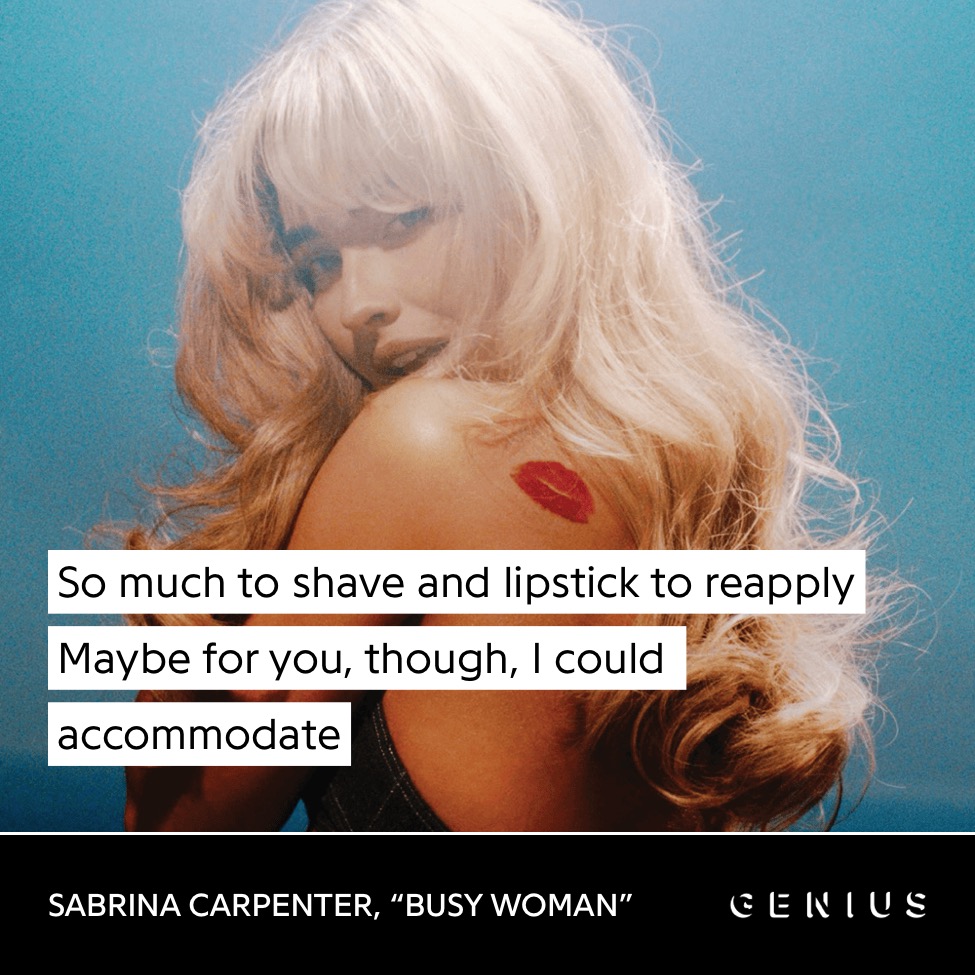
    2. Busy Woman” by Sabrina Carpenter 
    3. Salty” by CHUNG HA (청하) ft. Sunmi (선미)
    4. “Chaos” by Mutemath
    5. “Never Take Friendship Personal” by Anberlin
    6. There She Goes” by The La’s
    7. Bad Romance” by Lady Gaga
    8. I” by Taeyeon ft. Verbal Jint
    9. Moonlit Floor” (Kiss Me) by LISA
    10. Manic Monday” by The Bangles
    11. Florida!!!” By Taylor Swift ft. Florence + The Machine
    12. Cinnamon” by Hayley Williams
    13. Pink Pony Club” by Chappell Roan
    14. “Circles” by Post Malone
    15. “Video Game” by Sufjan Stevens
    16. Running Out of Time” by Paramore
    17. Linger” by The Cranberries
    18. I Blame the World” by Sasha Alex Sloan
    19. “Way it Goes” by Hippo Campus
    20. “The First Days of Spring” by Noah and the Whale
    21. Hung Up” by Madonna
    22. Choose the One Who Loves You More” by Copeland
    23. Butterflies” by Hearts2Hearts
    24. Kill[h]er” by Stand Atlantic
    25. Kiss Me” by Sixpence None the Richer
    26. “Spring Day” by BTS
    27. Goddess” by Pvris
    28. Candy Necklace” by Lana Del Rey ft. John Batiste
    29. “The Everglow” by Mae
    30. Not Strong Enough” by boygenius

    • 31. “Seasons” by Kye Kye

    Listen to the playlist on AppleMusic.

  • But a photo of a band tells us almost nothing. You may get the vibe or an idea about the style of music they play, but you can only make a guess. A studio album should give us a clue about the band’s live performances. A professional studio recording can use all kinds of enhancements—overdubbing, synthesizers, pitch correcting, even other musicians playing on the record that can affect what the band can sound like live. So many bands that put out great studio records absolutely suck live, but there are other bands with a live show that is far better than their recordings. That’s definitely the case of Mutemath on their 2006 debut eponymous record, which was good. In 2000, I was obsessed with Paul Meany and some of the other bandmates’ previous band Earthsuit’s only album, Kaleidoscope Superior. I was sad when Earthsuit broke up after leaving their Christian label Sparrow Records and releasing their less refined album, The Rise of Modern Simulation. In the ‘00s pre-YouTube time when my family had dial-up Internet, I was on Paul Meany and Adam LaClave’s email lists and learned about Math (later Mutemath) and Macrosick. Though LaClave’s band never seemed to make it distribution, I eagerly bought Mutemath’s debut EP, Reset, in 2004.

    AS I STARE THROUGH A LENS OF TEARS. Mutemath released their full-length debut album independently after a lawsuit with their distributing record label, Warner Music. The dispute was eventually settled, and the band released a remastered version with a few song swaps: “Control” and “Reset” were added from Reset, and “Without It” and the interlude “Polite” were dropped. Mutemath gained a reputation for their live shows. In 2007, Alternative Press even ranked them as the number 1 band to see live before you die. Sadly, I never got to see the band live; now Paul Meany releases music using Mutemath as a solo project, as all the other members have left the group. While I haven’t seen them live, the videos of their performances bring the songs to life in a way that their studio recordings cannot capture. For me, listening to Mutemath without the live experience was boring. Tracks like “Stare at the Sun” and “Stall Out” were nice late-night jazz bar songs, but during the exciting time of pop-punk, emo, and post-hardcore, Mutemath was just a little sleepy. It’s music I resonate more with in my 30s, but still, I feel like the lyrical content is lacking.

    IN THIS PHOTOGRAPH, WE’RE SAFE. Both Mutemath and Earthsuit are best when they are lyrically cryptic. Christian themes may permeate Kaleidoscope Superior and Mutemath’s early work, but when songs get too specific on spiritual themes, or in Mutemath’s case on romantic themes, the songs feel awkward showing that the bands are much more focused on instruments than lyrics. I hated “Noticed” because of the cheesy lyrics, but listening to it in 2025, I think Darren King’s drumming and Roy Mitchell’s drumming are an example of where alternative music would go in the 2010s with groups like BØRNS or Foster the People. “Picture” is not a unique song lyrically or even musically. It’s a bit too long for radio and it overstays its welcome as it doesn’t have much more to say in the bridge or the repeated chorus, but it’s an exciting ballad with the drum and bass moving the song at a faster than usual love song BPM. The Cure’s “Pictures of You” expresses a similar sentiment, as does Nickelback’s 2005 “Photograph,” released a year before Mutemath’s track and Ed Sheeran’s 2014 “Photograph.” A love song comparing the passage of time and the frozen moment in a picture doesn’t need many words to make the listener feel something. But unlike Chad Kroeger, Ed Sheeran, and Robert Smith, Paul Meany isn’t a tabloid rock personality listeners are dissecting lyrics to find out who he’s singing about—at least to my knowledge. Mutemath seems like mature, married men, whose passion is for making music and supporting their families. The music itself feels like it should be asexual—though not aromantic—and when it’s not it feels a little weird. But that’s just my opinion. 

    Read the lyrics on Genius.

  • No Scrubs on This List: Black History Month Playlist

    I want to celebrate Black History Month this year, especially when words like diversity, equity, and inclusion are under attack from America’s highest office. As I talked about in my blog posts this year, I’ve taken things like Black History Month for granted. Some scoff and think that America has diversified and no longer needs to celebrate its diversity, that choosing to be colorblind is the way forward in the twenty-first century. These mostly white folks who say this are missing a point as they quickly buy their plane tickets to vacation in the motherland of Europe: even if we’re over racism (we’re not), shouldn’t everyone have the opportunity to learn about their heritage? Shouldn’t everyone be able to discuss freely their past and their unique take on life? And especially important, shouldn’t we learn about the mistakes in the past as humans seem hellbent to try to forget their shameful past until they think everyone has forgotten and then try to repeat it?

    Black History Month became nationally celebrated during the bicentennial, 1976. Republican President Gerald Ford declared: “Black History is American history.” Of course, a white Republican president cannot take credit for starting Black History Month. President Ford may have encouraged all Americans to “seize the opportunity to honor” the accomplishments and contributions of Black Americans, celebrating Black History in the United States dates back to 1926 as “Negro History Week” founded by historian Carter G. Woodson. African American educators introduced the history week into first segregated and then desegregated schools. In 1970, the week coinciding with Abraham Lincoln’s February 12th birthday and Frederick Douglass’s February 14th birthdays became Black History Month. 

    Having blogged about music for five years, Black History Month is always a little tricky. I used to think that celebrating artists based on their race or during the observed months reduced them to a stereotype. But I’ve also realized that music has been curated in a segregated way called genre. Sadly, many musical genres, including the ones that I write about, were started by African Americans. We wouldn’t have blaring, fuzzy guitars if it weren’t for the Black pre-rockstars in the ‘50s before the British invasion and Elvis Presley’s cultural theft. Another reason I’ve avoided celebrating Black History Month in the past as a blogger is that I was always afraid of saying something wrong and offending my readers. It turns out, saying nothing is actually a lot more offensive, and as for getting things wrong, it’s going to happen. I beg my readers to point it out, I’ll acknowledge it, and we’ll try to move forward. 

    For this year’s Black History Month Playlist, I looked back at songs and artists I’ve blogged about or songs that a blog post reminded me of. The songs are old and new, but I don’t go back before the fifties. The artists featured range from the age of Doo-Wop to Hip-Hop and beyond. It’s a playlist I plan to listen to and maybe learn something interesting about the artists within. I hope that I can spend the rest of this month learning about these artists and have a better blog and more stories to share from music that isn’t in my regular rotation. After all, diversity is the spice of life.

    Here’s this year’s Black History Month playlist:

    1. No Scrubs” by TLC
    2. Not Like Us” by Kendrick Lamar
    3. Billie Jean” by Michael Jackson
    4. Smooth Operator” by Sade 
    5. Therapy” by Mary J. Blige
    6. Ain’t No Mountain High Enough” by Diana Ross (Marvin Gaye and Tammi Terrell cover)
    7. Killing Me Softly with His Song” by The Fugees (Lori Lieberman cover
    8. All Night Long”  by  Lionel Richie 
    9. We Belong Together” by Mariah Carey
    10. Bleeding Love” by Leona Lewis
    11. The Wizard and I” by Cynthia Erivo & Michelle Yeoh 
    12. Lucky” by Halsey
    13. The Boy Is Mine” by Brandy and Monica
    14. Then He Kissed Me” by The Crystals
    15. Hotline Bling” by Drake
    16. Cynical” by Propaganda ft. Aaron Marsh & Sho Baraka
    17. Take My Breath” by The Weeknd
    18. II Most Wanted” by Beyoncé ft. Miley Cyrus
    19. River” by Out of Eden
    20. A Bar Song” (Tipsy) by Shaboozey
    21. California Love” by 2Pac ft. Roger & Dr. Dre
    22. Saturn” by SZA
    23. L-O-V-E” by Nat King Cole 
    24. Fast Car” by Tracy Chapman
    25. I Only Have Eyes for You” by The Flamingos
    26. Somebody’s Watching Me” by Rockwell ft. Michael Jackson
    27. Super Bass” by Nicki Nicki Minaj
    28. Paint the Town Red” by Doja Cat

    Listen on AppleMusic.

  • I wasn’t excited about the GRAMMYs this year. They’ve been a documented mess for as long as I can remember, but something about Project 2025 threatening the future of free expression and the wildfires ravaging the largest bastion of liberal dissent didn’t have me in the mood to sigh at the poor choices the music machine would congratulate themselves on during the prelude to the post-apocalypse. It turns out that the GRAMMYs were actually good-ish this year. But rather than the GRAMMYs, it felt more like the People’s Choice Awards because 2025 was finally the year that the academy listened to the backlash and basically gave the people what they would have expected in any other awards show: the GRAMMYs. Beyoncé finally won Album of the Year for Cowboy Carter. She also won Best Country Album after being snubbed by the CMA Awards last year. Best New Artist went to the not-so-new Chappell Roan for her runaway success in 2024. Kendrick Lamar’s Drake diss-track “Not Like Us” won both Song and Record of the Year. This year, the academy also made amends with The Weeknd, who had withdrawn his music from future consideration after receiving zero nominations for his 2020 album After Hoursor its singles. The Weeknd performed two songs from his latest album, Hurry Up Tomorrow

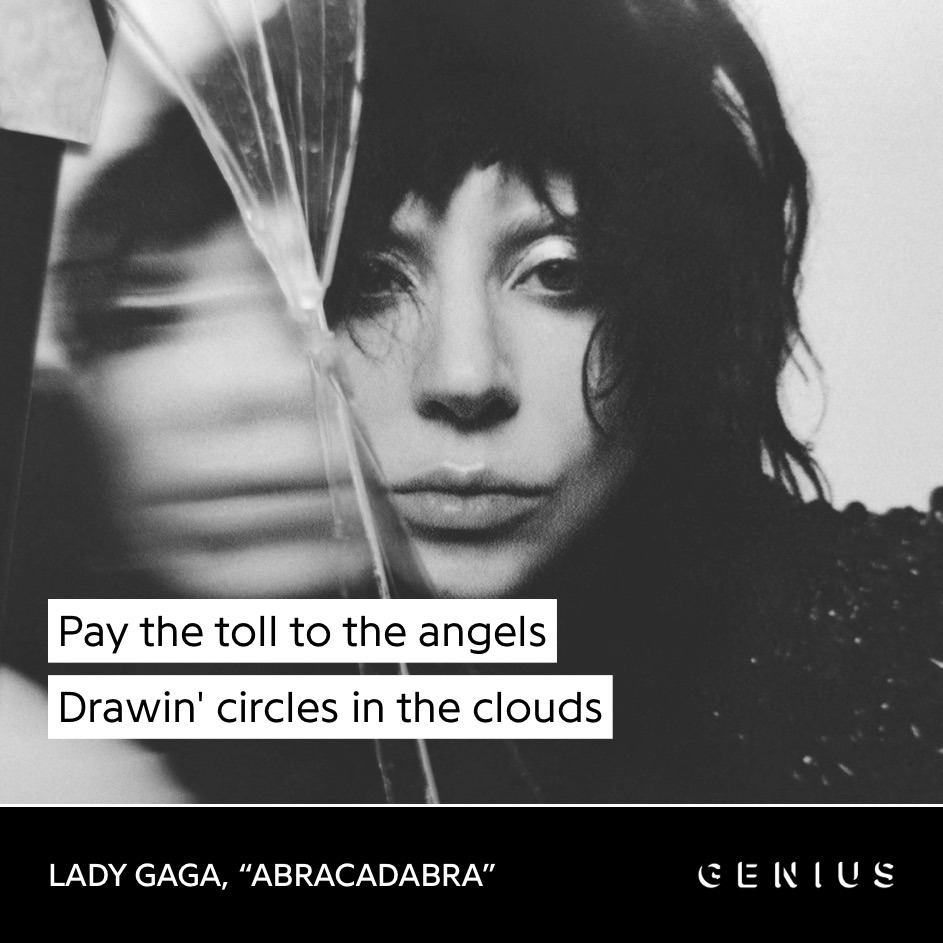
    LIKE A POEM SAID BY A LADY IN RED…Billie Eilish and Taylor Swift surprisingly went home empty-handed at this year’s GRAMMYs Eilish’s critically acclaimed third album HIT ME HARD AND SOFT produced three major hits last year, and the twenty-three-year-old former GRAMMY winner performed “Birds of a Feather” for the award show. Historic four-time winner of the coveted Album of the Year, Swift was seen clapping for peers, but her album The Tortured Poets Department went uncelebrated, despite her unorthodox announcement of the album in her acceptance speech last year when she won Album of the Year for Midnights. The GRAMMYS have traditionally been only a celebration of music’s past, particularly the last year’s, but Swift transformed her GRAMMY platform to promote where her music was going. Not to be outdone with Swift’s theatrics, Lady Gaga bought commercial time during “Music’s Biggest Night” to air the third single from her recently named album Mayhem. Abracadabra” is a continuation of the aesthetic Gaga gave us last October with her second single “Disease”; however, the latest single seems to be resonating with her fanbase even more than the second single. The music video illustrates the dark aesthetic of the album, drawing comparisons to Gaga’s Fame Monsterand Born This Wayeras. 

    DEATH OR LOVE TONIGHT. As we get closer to March 7th, when Lady Gaga is slated to unleash the full extent of Mayhem, we’re getting a clearer vision of reactionary art in the new Trump era. In her acceptance speech for Best Pop Duo/Group Performance for “Die with a Smile” with Bruno Mars, Gaga stated: “Trans people deserve love. The queer community deserves to be lifted up”—a direct response to the barrage of attacks, particularly on the trans community, in the second Trump administration. Mayhem isn’t directly related to the dystopian future in store for us, but rather to the embracing of chaos as an art form.  Gaga told Elle six days after the 2024 election results were revealed: “What’s bizarre is I did not write this album thinking that this would happen. I prayed it would not. But here we are.” With an increase in mayhem, the darker the vision of Gaga’s seventh album gets, making Gaga’s latest offering even more relevant. From the music video of “Abracadabra,” Gaga threatens the dark side of the feral energy Charli xcx gave us with BRAT last summer. The video contains an even more unhinged chant and Gaga’s primal scream not featured in the album version of the song. And with the return of Gaga’s early styles come the complaints of satanism from MAGA parents who conveniently forgot about their own teenage rebellion to the dark imagery of Mötley Crüe or Pantera. Speaking of the ‘80s, “Abracadabra” samples “Spellbound” from post-punk group Siouxsie and the Banshees, proving once again my argument from yesterday’s post that the New Wave keeps giving us new waves of the New Wave. Listeners also have noticed that “Abracadabra” sounds similar to Tears for Fears’ “Mad World.” This year is going to be turbulent—unprecedented, chaotic, scary. What we called normal may be completely turned upside down. Embracing Mayhem may be how we survive. 

    Read the lyrics on Genius.

  • I started watching Lisa Frankensteinon the plane a couple of weeks ago. It was a quirky movie that came out last year about a weird teen girl, Lisa Swallows, played by Kathryn Newton, who is an outcast in her school and her own family, composed of her father, stepmother, and step-sister. Lisa is a nerdy girl who loves reading, graveyards, and the New Romantics, a sub-genre of the more popular New Wave and part of the second British Invasion—think Spandau Ballet, A Flock of Seagulls. Her step-sister “Taffy” (Liza Soberano) is the exact opposite of Lisa—popular, pretty in an ‘80s teen film kind of way, socially keen, a cheerleader. As I was watching this movie, I wasn’t thinking about the Mary Wollstonecraft Shelley-driven plot, but rather about style and how perception about style changes throughout the years. In the ‘80s, the  English New Romantics and the darker post-punk bands were not as mainstream in America in the ‘80s as television suggests and only started coming to prominence at the end of the decade with pop hits from Love and Rockets and The Cure.  Hipsters in the ‘80s listened to Siouxsie and the Banshees and the earlier work of Joy Division, but the beer-chugging John Hughes jocks were probably listening to Mötley Crüe, Guns N’ Roses, or Van Halen. Maybe U2’s popularity paved the way for the English Alternative Rockers, but U2’s Christian identity and radio play distinguished them from the “cred” British bands. 

    YOU KNOW IN THE END, I’LL ALWAYS BE THERE. The Napoleon Dynamitevibes Lisa Frankenstein gives are more than its inclusion of the one-hit-wonder “The Promise” by When in Rome, but music is the discussion of the day. This supernatural teen romance between Lisa and a reanimated corpse (Cole Sprouse)—think Dr. Frankenstein’s creature—didn’t keep me watching until the end, but it got me thinking about the ‘80s movie tropes, mainly the social bifurcation between the nerds and the popular kids. The 1984 comedy Revenge of the Nerdsexplored what would happen when gawky young men used their skills to outsmart the jocks. Then twenty-three years later in 2007, CBS aired The Big Bang Theory, a show about socially inept young scientists and their nerdy interests and their (in later seasons) hot girlfriends. What was more interesting than the show itself was the mainstreaming of nerd culture. Suddenly, it was cool to spend your Saturday night playing Dungeons & Dragons or vegging out on video games or collecting comic books or even cosplaying. But what was the ultimate revenge of the nerds? Brains really did beat brawn as the ‘80s nerds are rich from developing our digital world. With that wealth, some of them have bulked up and look much better than the former high school quarterback. Nerds have helped to rewrite our understanding of the ‘80s and what was popular, as they have included some of the more niche bands and cult films into our cultural canon. 

    WHEN YOUR DAY IS THROUGH, AND SO IS YOUR TEMPER. I was born in the late ‘80s, so take everything that I just wrote as just pure speculation. I didn’t grow up during that time, and my earliest memories of the ‘80s were sneaking my dad’s coffee, eating dirt, and my parents watching The Cosby Show and Alfnothing related to music. My understanding about the “weird” music of the ‘80s that has become more popular in post-80s revivals comes from podcasts and conversations with my parents and older friends who lived through that time. Hit Parades 2019 episode The Lost and Lonely Edition helped to tell this story. The fact that these groups never got as much radio airplay as the popular music makes the bands feel more legendary. But if you watch revisionist ‘80s shows, Netflix would have you believing that all the cool kids were constantly vibing with New Order or listening to Kate Bush in their bedrooms. In 2014, Taylor Swift released the song “New Romantics.” The title of the song was a nod to the distinctly British movement during the ‘80s with the synth pop and post-punk bands of the time. As a songwriter, Swift has taken an interest in this movement, even drawing parallels between this time and her associations in London, particularly on her latest album, The Tortured Poets Department. Whether or not she pulled off the artistic fête is a discussion for another day. But like the music director of Lisa Frankenstein and a number of other films and series, Swift participates in musical revisionist history, elevating the niche ’80s genres to seem bigger than they ever were. You can also find this in the music of bands such as The Killers, particularly in their earlier music. The band named themselves after a fictional band in New Order’s 2001 music video for “Crystal.” Anberlin is another band that derives much of their influence from ‘80s post-punk and the New Romantic pastiche. You can also find post-punk influence in surprising acts as the sound has become intertwined with what we think is cool in the 2020s, from The Weeknd’s “Gasoline” to Chappell Roan’s Kate Bush aesthetic. The nerdy and weird went mainstream, and computer geeks rule the world. But what makes our culture keep digging in this well of ‘80s nostalgia? The ‘80s revival of the ’00s didn’t end in the ‘10s and continues into the ‘20s, giving us more and more experience with lesser known groups, further distorting our memories of that decade. 

    Read the lyrics of When in Rome’s “The Promise” on Genius.

  • If we don’t learn from history, we’re doomed to repeat it. It’s an adage I didn’t believe when I was in school. My childhood was in the optimistic ‘90s. America’s greatest threat had become an ally. I took installations like Martin Luther King Jr. Day as a nice day off of school in February and naively believed that everyone was just as ready to bury racism in the past and move on to an exciting equitable future. Then I moved to the South, where I learned that they told themselves that the Civil War was merely about states’ rights. My mom recalls getting the bird before we changed our New York plates—a Yankee family in a beat-up Chevy Astro was so hated, I wondered what if we weren’t white. The George W. Bush/ post-9/11 era should have been a time when I realized that history could repeat itself, but Seventh-Day Adventist teachings had us more focused on the apocalypse than the socio-political implications of the wars in Afghanistan and Iraq. I don’t remember when the gloom of 9/11 broke and when America began to feel normal again, when everything started to feel less like survival guilt or that another tower was going to fall or that a nuclear power plant would explode, but somehow it ended, and America learned to party again, even legalizing same-sex marriage.

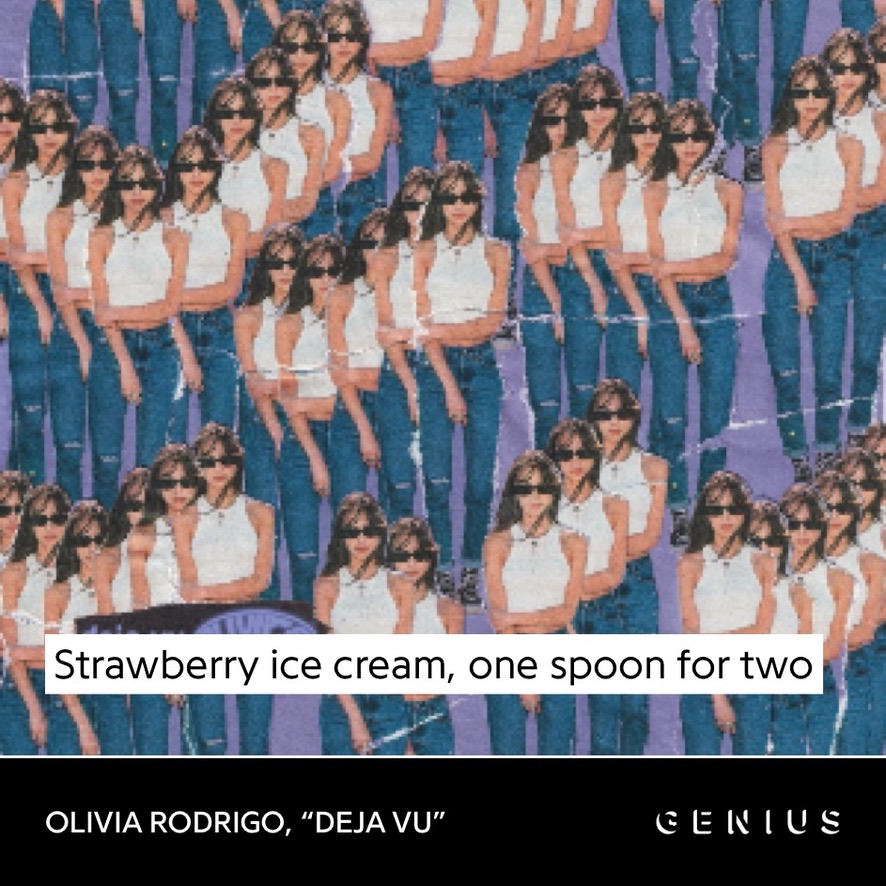
    SHE THINKS IT’S SPECIAL, BUT IT’S ALL REUSED. In 2021, Olivia Rodrigo began her pop career with SOUR, a hit album with two number 1 hits and several other top 20 hits from the album. Rodrigo was different from many pop singers as she was able to grab a diverse fan base, bringing fans from her teen Disney career and older fans who found something nostalgic in her music, especially by her third single “good 4 u,” which established the singer as a bona fide rocker. Her second single, “deja vu,” credits Taylor Swift’s “Cruel Summer” as inspiration. Rodrigo’s second single is a sequel to her debut single “drivers license.” That song brought about the discussion about the alleged love triangle between Rodrigo’s High School Musical: The Musical: The Series costar Joshua Bassett and the “blonde girl,” most likely Sabrina Carpenter (pre- Short n’ Sweet). In “drivers license,” Rodrigo laments that the one reason she was looking forward to the namesake’s rite of passage is to spend more time with her boyfriend, but this is all for naught since he has moved on to another girl. The sequel, “deja vu,” is a further lamentation on the end of the relationship, listing the fond memories in specific detail of singing harmony to syndicated episodes of the musical dramedy Glee to Rodrigo sharing her love of Billy Joel with him. Those precious moments spent together; however, are then recycled on the next love interest, causing Rodrigo’s frustration. She asks her ex if he ever gets déjà vu when he’s with her. Interestingly, last year when Sabrina Carpenter released the song “Taste,” the song felt a bit like déjà vu of Olivia Rodrigo, though “Taste” is supposedly not about Bassett but rather about Shawn Mendes.

    WATCHING RERUNS OF GLEE. Maybe nothing’s new under the sun, as King Solomon complained. Maybe “strawberry ice cream with one spoon for two” feels like an original date idea when you’re 16, but eventually we run out of ideas. Last year, something eerie happened: more and more of us started to experience déjà vu. It’s like we were reliving the year 2016 and 2020 at the same time. The Super Bowl felt like déjà vu with the same teams playing from 2020. South Korea faced impeaching a president. Faker won the League of Legends championship in both 2016 and 2024. And of course, “Weird Al” Yankovic pointed out this phenomenon in The Gregory Brothers “songifying” of the June 27th presidential debate. “Deja Vu” (But Worse) highlights what many Americans were thinking: the prospect of two power-hungry presidential candidates arguing about their golf scores in what should be a nursing home, but it was really on America’s cable news network, CNN. Yankovic asks, “Have we fallen under a wizard’s curse / to suffer déjà vu, but worse?” In the middle of the song, Yankovic, exasperated, lists all of the sequels this pairing of presidential candidates is worse than. He even asserts: “I think Olivia Rodrigo would agree, this is worse than your ex eating strawberry ice cream.” Since the cursed presidential debate and Biden dropping out of the race, Harris’s campaign couldn’t help but feel a little similar to Hillary Clinton’s cursed 2016 candidacy, mainly the establishment vs. the antiestablishment, and it turns out people really hate the establishment. Now the déjà vu seems to have been reset to a time before I was alive; it’s a combination of pre-Civil Rights marches and pre-Nazi Germany. The very free world that most of us have taken for granted is under attack. It’s the most dreadful case of déjà vu imaginable. It’s like watching Groundhog Day, as the same people repeatedly make the wrong choices. Bill Murray is trapped in Punxsutawney, Pennsylvania, forever doomed to miss Andie MacDowell. Meanwhile, the news broadcasts reveal the gradual erosion of our rights, leading to our assimilation into the tools of the oligarchs. 

    Read the lyrics on Genius.

  • It’s finally here. I’ve been a terrible blogger since I’ve gotten mixtapEmotion off the ground. The first year that I wrote my NewYearsDayProject blog, I had new content every day, but the second year I found that I could start reposting. With my new blog, I thought the very least I could do was to post my playlists on time. But after goodbyes to my family in North Carolina on January 31st, I arrived in Korea on February 1st at 6 p.m., exhausted. I’ve been exhausted ever since.

    Excuses aside, I’d like to explain this year’s February playlist. Last month’s playlist devolved into angst-ridden rock music. This month we start with one of my least favorite Anberlin songs from their classic album Never Take Friendship Personal. The sugary, down-on-your-luck pop-punk sound of “Stationary Stationery” embodies a playlist that is hopeful at times and spiteful at others. I wanted to leave the desperation and hopelessness in January and focus on what we can do about the current situations. 

    Next, to represent Groundhog Day, more specifically, the Bill Murray/ Andie MacDowell classic about being stuck in a time loop, we will hear Olivia Rodrigo’s “deja vu.” When in Rome’s “The Promise” follows, sweetening the “strawberry ice cream” from Rodrigo’s SOUR break-up song and attempting to celebrate love as a build-up to Valentine’s Day. 

    My original version of the playlist had Mary J. Blige’s “Therapy” as the fourth track, but during a commercial break at the Grammys, Lady Gaga premiered the music video for her new music video from her upcoming album Mayhem—“Abracadabra.” Mayhem seems to be the key word for 2025, so maybe the zeitgeist album of the year?

    I wanted to make a better attempt to celebrate Black History Month, especially when it has never been under attack in my lifetime, so I made a greater effort to include songs in the playlist from Black artists from TLC’s “No Scrubs” to Lionel Richie’sAll Night Long” at the end of the month. I recognize that any effort I make is insufficient and controversial, but I think in 2025, we have to do what we can. 

    This month’s playlist is a mixture of old and new, like always. The ‘70s is represented more than I usually include them with songs like Led Zeppelin’s synth ballad “All My Love” and Diana Ross’s cover of the 1967 Marvin Gaye and Tammi Terrell song “Ain’t No Mountain High Enough.” Every decade after the ‘70s is represented as well with several songs from the ‘80s including Phil Collins’ “In the Air Tonight” and A Flock of Seagulls’ “And I Ran” (So Far Away), the ‘90s with The Fugees’ cover of “Killing Me Softly with His Song,” the ‘00s with “Mutemath’s “Picture,” the ‘10s’ Paper Routes’ “Love Is Red” (With Every Shade of Blue), and several songs from the ‘20s including last year’s “Not Like Us” by Kendrick Lamar who won record of the year and will perform at this year’s Super Bowl Half Time Show.

    Because the playlist is not stationary, but rather under constant threat of revisions, I will write down the original playlist and the February 8th edited version. I update my playlist as I become aware of new releases or another song’s relevance superseding the planned song. This doesn’t always make the playlist better. Last month’s addition of Tom MacDonald and Roseanne Barr’s “Daddy’s Home” was a blight on the playlist, but I felt that it added to the story of what January was. So here’s this month’s playlist before it goes crazy:

    1. “Stationary Stationery” by Anberlin
    2. “deja vu” by Olivia Rodrigo
    3. “The Promise” by “When in Rome
    4. “Abracadabra” by Lady Gaga —originally “Therapy” by Mary J. Blige
    5. “No Scrubs” by TLC
    6. “Picture” by Mutemath
    7. drinks or coffee” by ROSÉ
    8. Bed Chem” by Sabrina Carpenter
    9. “Not Like Us” by Kendrick Lamar
    10. Cherub Rock” by The Smashing Pumpkins 
    11. “All My Love” by Led Zeppelin 
    12. “Love Is Red” (With Every Shade of Blue) by Paper Route
    13. Your Love” by Tyson Motsenbocker cover of The Outfield
    14. a thousand years” by Christina Perri
    15. Landslide” by Fleetwood Mac
    16. Hallelujah” by Shawn Mendes
    17. Fortnight” by Taylor Swift ft. Post Malone
    18. Archangel” by Olly Alexander
    19. “In the Air Tonight” by Phil Collins 
    20. “And I Ran” (So Far Away) by A Flock of Seagulls 
    21. JUPiTER” by Coldplay 
    22. Gimme! Gimme! Gimme!” (A Man After Midnight) by ABBA
    23. Billie Jean” by Michael Jackson
    24. Smooth Operator” by Sade 
    25. “Ain’t No Mountain High Enough” by Diana Ross (Marvin Gaye and Tammi Terrell cover)
    26. “Killing Me Softly” by The Fugees (Lori Lieberman cover
    27. Red Wine Supernova” by Chappell Roan
    28. “All Night Long” (All Night) by Lionel Richie 

    Check out the AppleMusic version.