On the first season of the Labeled Podcast, Aaron Marsh talked about his writing process for Copeland‘s debut album, Beneath Medicine Tree. In early 2019, he returned to the podcast to talk about the band’s latest album, Blushing. If most listeners casually picked up the two records, forgivably, they’d assume they were listening to different bands. Beneath is a guitar-driven product of late ’90s/early ’00s emo rock. The album has mostly an optimistic tone. Blushing is a dark electronic-influenced album with darker lyrics. Marsh told Labeled host Matt Carter that rather than writing lyrics that are easily pinned to real people, like his ex-girlfriend Paula (in the song “When Paula Sparks“) he doesn’t “want to write songs about [his] private life.” He says, instead, “I want to write poetic songs about my private life.” The band’s fourth album, You Are My Sunshine, does just that. Listeners don’t know the deep sense of loss– if there is one–that inspired this album. Instead, we are invited to think about how we are left to interpret the band’s lyrics. Today, we will take another look at Copeland’s masterpiece, discussing the neediness in the opening track, “Should You Return.”
THERE’S NOTHING LEFT TO DO BUT WASTE MY TIME. A Copeland song isn’t merely recorded. It’s a composed piece of music that has layers of production. Production is overseen by the frontman, singer, and multi-instrumentalist, Aaron Marsh. Copeland’s fourth album, You Are My Sunshine, seems to be the biggest shift in the band’s sound. Bryan Laurenson‘s lead guitars are a layer to the band’s keyboard/ synthesizer sound. Listeners won’t find the 1940 Jimmie Davis/Charlie Mitchell song on the album. The song does appear on their Grey ManEP, however. The theme of the lyrics of “You Are My Sunshine,” though–“you make me happy when skies are grey” and “please don’t take my sunshine away”–can be felt at times throughout Copeland’s fourth album, as if the short old-time country song is a ghost haunting the album. “Should You Return,” like every track on the album, has a hypnotizing effect, pulling the listener into their own thoughts rather than thinking about the music itself. I had to focus very hard to read the lyrics of “Should You Return” because my mind wandered, and I couldn’t help but hum the song. But, the experience of reading only the lyrics (after a few attempts of being lulled by the melody of the song), left me sad. The question posed by the song is left unanswered.
BUT IF YOU’RE UNHAPPY STILL, I WILL BE WAITING ON A LINE. Copeland released official music videos for most of the songs on You Are My Sunshine. Most of them are as banal as the mood you have to be in to enjoy this album. The video for “Should You Return” focuses on guitarist Bryan Laurenson. In the video, he has lost his girlfriend, and the story is told using stop-motion animation with photographs as well as actual video. At the end of the video, Laurenson falls off a cliff only to wake up to discover that the ex-girlfriend is actually looking at an old photo album. She sees Laurenson reaching for her, but she promptly shuts the cover and walks away. The lyrics depict loss. The singer is complete but for one piece he’s missing, the one he loves. Yet, the one he loves is toxic for him: “a love to make it hurt.” The song finds the singer at a point of loss in which he wishes for something new to have and then to lose as if to feel the pain even deeper. Yet, the song ends “hanging on a line, should [the listener] return.” The music makes us believe that maybe there will be a Hollywood ending. Maybe, like Scarlet from Gone with the Wind, we can say, “After all, tomorrow is another day.” The music of Copeland often deals with the bleak. But, other than Blushing and parts of Eat, Sleep, Repeat, the band can make us leave the record feeling rejuvenated. Ultimately, we have to heal from our losses. We can’t hang on the line forever. But “Should You Return” is a song to wallow in the pain for a bit.
Thomas Wolfe is most famous for his novel You Can’t Go Home Againwhich is a tome that I haven’t read. However, I did read his first novel, Look Homeward, Angel, which deals with similar themes. I picked up the book in the middle of a semester from hell and an existential crisis. I found Wolfe’s descriptions of Southern life–the people in town and family members, the scenery, and the food–so comforting. The mostly autobiographical novel is nostalgic, but the protagonist, Eugene’s academic pursuits push him to see the world outside of the isolated mountain town of Altamont (Asheville).
DEFER TOMORROW. The Juliana Theory is a band whose influence far exceeds its success. Formed as the side project of Brett Detar, the guitarist of the Christian metal band Zao, when he wanted to incorporate the catchiness of radio rock bands like Third Eye Blind that the metal band listened to in van on tour, The Juliana Theory became a legendary band in the pop-punk scene. The Juliana Theory was the first general-market Tooth & Nail band, which Detar talks about on the band’s episode of the Labeled podcast, saying that being a non-Christian band on a mostly-Christian label caused the band to be neglected when it came to marketing. However, the band did transition to Epic Records, but after commercial failure, the band broke up in 2006. But like so many legendary bands, that wasn’t the end of the story. The Juliana Theory was one of those COVID groups that decided to try a DIY approach to make new music. First, it was today’s song, “Can’t Go Home,” then “Better Now,” which was included on a project of reworked songs from the band’s career. In 2022, the band released an EP of nostalgic pop-punk tracks called Still the Same Kids Pt. 1.“Can’t Go Home” perfectly captures the new sound of The Juliana Theory. There are clear ties to the past sound—the driving bass and guitar. But newer pop hooks, campfire-sounding songs, and a little bit of gospel make the song infectious.
THE ONLY CERTAIN IS WE CAN’T GO HOME. The Juliana Theory’s lead single from Still the Same Kids Pt. 1 is an equally nostalgic track called “Playback ‘99 (Burn the Cassette Deck).” The song’s lyrics focus on all the greatness of the late ‘90s. But one of the most interesting things about that song is the varying tempo, mimicking a faulty cassette tape. The Juliana Theory has grown as musicians. It’s not the same band from the early ‘00s, and that’s what “Can’t Go Home” is all about. In 2022, many of us are longing to get back to 2019. Many of us hold a nostalgia for a pre-pandemic world, and we’re frustrated when things aren’t returning to normal. “Can’t Go Home” assumes that things aren’t going back. We have to move on and move forward. Besides, I recall in 2019 longing for things to go back to normal like they were pre-President Trump. Maybe we’re always searching for what makes us feel safe. Maybe we’re always living in the past, but the truth is, we can’t go home.
This Is All I Know is the final album by Number One Gun. The band from Chico, California, became one member–Jeff Schneeweis—in 2007 on the band’s The North Pole Project. The other members went on to form the band Surrogate and work with other bands such as Emery. There was a lot of controversy surrounding Number One Gun’s last album, related to the late fulfillment of crowd-funding. Some backers for the 2014 album claimed as of 2021 they hadn’t received what they had been promised. After releasing This Is All I Know, Schneeweis declared that Number One Gun finished and started releasing music under the moniker Lael. This Is All I Know is the end of the Christian Rock era.
HEAVY IS UPON US. Just as Anberlin had announced their farewell in 2014, several other bands called it quits. In 2017 the band Yellowcard, along with Anberlin drummer Nathan Young, recorded their final album and gave their farewell tour. After Anberlin ended, Stephen Christian was busy first in Nashville as a songwriter and then as a Worship leader in New Mexico. He released a worship project titled Wildfires and an Anchor & Braille project titled Songs for the Late Night Drive Home. He also offered guest vocals on Fireflight‘s “Safety” and Number One Gun’s This Is All I Know including today’s song, “Disappear.” Stephen and Anberlin reunited in 2018 to play a show with Underoath in Tampa, Florida. Anberlin has remained active, but Stephen announced in late 2023 that he would be taking a hiatus from touring with the band and Matty Mullins of Memphis May Fire would step in on the band’s 2024 tour dates. In the announcement, Stephen said that he wanted to step back from his touring duties to focus on his family and his other ventures such as his pastoral role.
HATE IS OVERRATED. One of the reasons I started this blog was to indulge in the stories of disappearing artists. Sometimes bands get a farewell tour. I remember watching Anberlin’s farewell tour around this time in 2014 on Yahoo!’s concert series. Of course, Anberlin was one of the successful acts that not only had a farewell tour, but subsequent “welcome back” tours. Anberlin determined that being an independent act works because they have fans who will go along with whatever they do. Smaller acts didn’t always have that luxury. What about bands that recorded one or two albums only to be dropped from their record label. Sometimes we get press statements. Sometimes we get “we’re looking around for another label” statements. Most of the time casual fans aren’t scouring the Internet for an article about whatever happened to Acceptance or Edison Glass. Thanks to podcasts, I’ve been able to become more connected with my music, but still there are a lot of bands left unaccounted for. And how long does it take us to recognize a band as missing? While the pandemic had been a time of great innovation for bands with large, established fan bases, we may be asking ourselves whatever happened to their opening acts? As rock radio stations disappear, the stations that are left contain bands that can’t crack the top 10. Without an active fan base, the big bands will stay big, and the smaller bands will, well, disappear. Is it survival of the fittest? No, it’s truly a battle of the bands.
In a few days, I’m heading to London for a quick trip. I thought I’d share a playlist to get myself even more in the mood for the trip. I’ve included songs by bands and artists who have sung about the city or close associations with the United Kingdom capital. A quarter of my music is probably associated with the UK. It would be interesting to see how much of all music, whether American or global, is British. It’s my first trip to England, so I am still determining what to expect. It’s a journey so many Americans romanticize, and I’m no exception. I’ll be pretty busy in the coming two weeks. I’ll try to post every day–mostly reposts. See you when I get back!
Spotify Wrapped probably flooded your social media right last month. Two years ago, I got jealous, so I subscribed to Spotify. Apple Music started Replay in response to that Wrapped jealousy, but I still don’t see many people posting their Replay stories on Instagram. I never stopped listening to Apple Music, though. I have different habits for listening to Spotify and Apple Music, and today I’m going to discuss the differences between those two listening habits.
HONESTY WAITS HERE FOREVER.
I started using Spotify last year. I decided to start linking the artist, album, and songs on Spotify if available because it seems that Spotify has more listeners than Apple Music. Last year, I used Spotify mostly for my blog and didn’t listen to it much. I listened to Apple Music on my own time, and whenever I was in the middle of writing my blog and needed to listen to a song, I listened to it on Spotify. This year, I listen to Spotify for my blog but I also switched to Spotify at work. Apple Music for Windows was awful and took a long time to update. Furthermore, Apple Music for Windows is integrated with podcasts and Apple TV. The platform constantly downloaded my podcasts on the computer, and some of them were NSFW. I turned off the setting but decided just to listen to Apple Music at home. So this year, the difference between Spotify and Apple Music is work and blog time versus home and phone listening, like when I’m at the gym or out for a walk. Of course, this isn’t always the case. I might pull up Spotify when I’m on my phone, but it’s not my general habit. Another habit I have at work is to skip explicit tracks. I listen on headphones, but I have a code of conduct for my work music. I put a kind of FCC radio ruling on my work hours, imagining that I work at a place where I would have to share my music in a common space. It’s a stupid rule, but maybe it helps me not curse so much at work and not have a slip-up when I’m teaching.
COLD AND WIRED. Of the 25,061 minutes of music last year, Spotify says that I listened to Taylor Swift the most followed by Anberlin. Apple Music, in the 16,723 minutes I listened to music on that platform, reverses the order, saying that I listened to Anberlin the most and Taylor Swift the second most. To be fair, it seemed like Spotify’s algorithm played “Cruel Summer” as part of their “non-stop up next” suggestions after listening to any pop song or album, which probably increased my Taylor Swift play count. But Acceptance‘s “Cold Air” was my second-most-played song on Spotify and my third-most-played song on Apple Music.
OneRepublic had finished recording their second album, Waking Up, but had two more days with the studio. But the band’s bassist/cellist Brent Kutzle told lead singer Ryan Tedder that he wanted to stay in the studio to flesh out an idea he had. That night, Kutzle wrote the band’s biggest hit from the album, “Good Life.” Waking Up’s singlespaled in the shadow of OneRepublic’s first hit “Apologize,” which reached number 2 on Billboard’s Hot 100. “Good Life,” the album’s third U.S. single, reached number 8 on the Hot 100. The album’s first two singles, “All the Right Moves” and “Secrets” failed to reach the top 10. Besides radio play, “Good Life” was played in many television shows and commercials. This upbeat song has optimistic, sincere lyrics, making it refreshing among often negative or trite optimism in pop music.
SOMETIMES THERE’S BULLSHIT THAT DON’T WORK NOW. I remember a time in the early ‘00s when so many bands and artists on the radio were Christian or Christian-adjacent. There was a practical reason for this: young musicians could easily get in their 10,000 hours playing in churches. However, this permeation of pop culture created a dilemma for Christian radio stations. Christian radio could capitalize on bands like Lifehouse and P.O.D. The former crossed over to Christian radio, one of the first groups to do this. In 2003, Christian radio was shaken when Evanescence pulled their single “Bring Me to Life” from Christian Rock radio and their album Fallenfrom Christian retailers. Then in 2005, Christian radio started playing The Fray’s “How to Save a Life,” after the song became an overnight sensation due to its placement on Grey’s Anatomy. The next year, Christian radio played Daughtry’s “Home.” Despite both artists including mild profanity— hell and damn—, which was unheard of in the Christian Adult Contemporary genre before, the artists’ testimony of being raised in the church and on CCM seemed to give them an entry. But by the time OneRepublic debuted in 2007, the age of Christian crossover seemed to be over, despite the members of the band talking about their CCM influence and personal faith. Then in 2009, the band released their first explicit track, “Good Life.” This song perhaps put more separation between the band and their Christian fans. “I guess Ryan Tedder’s no longer Christian” some speculated. This was before the time of progressive Christianity and deconstruction podcasts taking the mainstream of Christianity. OneRepublic, like U2 had done in the ‘90s, made the discussion of what could be Christian music a bit murky.
WOKE UP IN LONDON YESTERDAY. Listening to Ryan Tedder talk about the whirlwind at the beginning of his career on the And the Writer Ispodcast and how he balances his life between his different businesses and family is inspiring to me. Last year was all about building a routine in which I can balance work, exercise, writing, my personal life, and my relationship. It was one of the busiest years, but I’m proud of how much I was able to fit in 24 hours. But unlike Tedder’s routine, “Good Life” talks about a time when routine doesn’t work—at least routine as we tend to understand it. The song talks about touring, waking up in different cities, and meeting new people. The speaker also talks about the friends who are left behind due to the band being on the road. Tedder built his career in Los Angeles but decided to move back to Colorado to focus on his family life (pun not intended) when he wasn’t touring or writing/ producing pop stars. “Good Life” is an anthem for the busy. Even when things don’t work out, we can still say it’s going to be a good life.
The ‘90s in rock music started quietly. Hair metal was still around, but vibey New Wave tracks had gained traction in the late ‘80s. It was an eclectic time without a clear direction for a musical style. Of course that all changed in the fall of 1991 when Nirvana burst onto the scene and Alternative and mainstream rock listeners determined that grunge would be the collective musical trend. Just as disco didn’t die in 1979, the New Romantics sound of the late ‘80s carried over into the early ‘90s. In fact, in the early ‘90s, New Order, The Smiths’ Morrisey, and Depeche Mode enjoyed their peak success. For Depeche Mode, that success came from a dark pop song, which crossed the Alternative Rock band over to the pop charts with the single from their seventh album Violator, “Enjoy the Silence.”
ALL I EVER WANTED, ALL I EVER NEEDED IS HERE IN MY ARMS. Produced by the now legendary Mark Ellis, better known as Flood, Violator was years of dark electronica in the making. Flood’s first credits begin as an assistant engineer in 1981 on New Order’s first record, Movement. By 1983 he engineered Ministry’s debut With Sympathy. In 1985, Flood produced two singles for the synth-pop group Erasure, whose Vince Clarke had been the lead vocalist of Depeche Mode before leaving and being replaced by Dave Gahan. Flood began working with Depeche Mode in 1985 as an engineer on several of their singles. Then in 1987, he worked as the engineer on the Brian Eno-produced U2 classic The Joshua Tree. Flood closed out the ‘80s, producing co-producing Nine Inch Nails’ Pretty Hate Machinewith Trent Reznor. After Depeche Mode’s seventh album, Flood went on to be a massive producer in the ‘90s and ‘00s, producing albums such as The Downward Spiral, U2’s Zooropa, The Killers’ Sam’s Town, and Thirty Seconds to Mars’ This Is War.
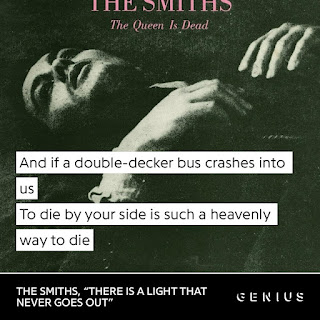
WORDS ARE VERY UNNECESSARY.“Enjoy the Silence” reached number 8 on Billboard’s Hot 100, the highest-charting pop song of Depeche Mode. The song focuses on the unspoken rather than the explicitly stated. Like “There Is a Light That Never Goes Out,” “Enjoy the Silence” is open to multiple interpretations. What vows is the speaker speaking about? And what “is here in [his] arms”? Another similarity with yesterday’s song besides both groups’ queer-coded associations is that Anberlin also covered “Enjoy the Silence.” The band recorded a cover of songs that influenced them for their first four records, starting with The Cure’s “Lovesong” on Blueprints for the Black Market. In the recording sessions for their sophomore record, Never Take Friendship Personal, the band recorded “Enjoy the Silence” but left it off the record because they had already released a cover on their first album. Lead singer Stephen Christian said that they didn’t want to be the band that had a cover on every album. The band did end up releasing the track as part of the 2006 compilation Punk Goes ‘90s. The theme of silence appears on Anberlin’s third record, Citieson the fourth track, “A Whisper & a Clamour,” the bridge of which gives an emotional answer to the verse and the Psalm 47:1 reference: “It’s not the lies that you say, but what the silence will scream.” Of course, Anberlin covered “There Is a Light That Never Goes Out” along with the When In Rome hit “Promise” during the Cities sessions, and the band released a cover of New Order’s “True Faith” on the deluxe edition of their fourth album, New Surrender. Anberlin was an example of a band that displayed their New Romantic influences for everyone to see, but many other bands in the ‘00s emo scene cited the ‘80s melancholy rockers as influences. It took me a while to get into my favorite bands’ influences, but with more exposure to them, I might think that the original might be better in many cases. But certainly, the recording technology improved in the ‘00s.
My Christian school took an annual mission trip in the spring to Chattanooga, Tennessee. The school had partnered with a church in the inner city that had a Habitat-for-Humanity sort of outreach. It was one of those “I feel more ministered to” type mission trips. We ended up doing a lot of grunt work for ongoing projects, but we were made to believe that we were of some use. Of course, this was before I learned that most of the churches built on mission trips overseas have to be torn down the minute the missionaries step on the plane because of course unskilled builders don’t know how to build–but I digress.
DO YOU HAVE THE TIME TO WASTE AWAY THE DAY? One of the rules of the mission trip was that we were only allowed to listen to Christian music. It could be any genre, but it became a time for some of us to show off our CDs of the hard rock, metal, punk, and Emo-Christian records that made their way to the Family Christian bookstores. Sometimes we’d listen to Grits because a van full of white kids from a school in the foothills of North Carolina that taught racist history felt that we all should become more culturally sensitive for a week. But after a few songs from Grits‘ The Art of Translation— “Here We Go” and “Ooh Ahh“–, it was back to rock and metal in the form of old-school Disciple, Skillet, and P.O.D. In 2005, my junior year, the self-titled album by Day of Fire was one of the biggest hits in the vans traveling to Chattanooga. The band didn’t have a video on TVU for their debut, but they had hits on RadioU so I was aware of them before the trip, but had never bought the record. After the trip, I bought the record and listened to it throughout the summer. Then in the fall, I took a Sociology course at the local community college with my sister on Tuesday nights, and we listened to the record every Tuesday night. It was eventually replaced in late October when Falling Up released their sophomore record, Dawn Escapes.
SOUND THE ALARM FOR JUDGEMENT DAY. September nostalgia hits me differently every year. This year it’s taking me back to my Christian rock youth. I listened to Day of Fire last October when I talked about the final track on their eponymous record, “To Fly.” The band’s selling point was lead singer Josh Brown‘s conversion story, from drug-addict lead singer of the band Full Devil Jacket to acclaimed Christian rocker. It was similar, though lower profile than when Korn‘s guitarist Brian “Head” Welch became a Christian and started making Christian nu-metal. Day of Fire had a run from 2005-2010. In 2007 or 2008, there was a band member from a little-known Australian band, JaeL, who visited our campsite for some reason and was talking about who knew in the Christian industry. There are two details I remember from the conversation. The first was how he worried about Showbread showing their Nine Inch Nails/Marylin Manson influences on their twin records Anorexiaand Nervosa. The second was about his hanging out with Josh Brown. “Sometimes he accidentally swears when he gets really excited about something.” I can’t find JaeL on Spotify and something makes me think that they aren’t still around, at least under that name. I suspect this guy didn’t actually rub shoulders with many Christian rock stars because I have a hunch that more of them were swearing than just the former-hardened converts. We now have more access to band members thanks to social media and podcasting, and during the explosion of Christian and post-Christian podcasts, we started to realize that “Christian Rock stars” were just like us, cursing and all. Of course, Christian Rock is all but turned into worship music these days. Isn’t time interesting?
Rather than reposting U2’s “New Year’s Day” for the fourth year, I started the year with my Top 23 Songs 2023. I stuck to one song per artist, and the order is in flux. I’ve blogged about some of these songs, and some of them not yet. I’ll briefly describe the song and link to the original post if I wrote about it before. This isn’t a list like Paste or Billboard; it’s purely subjective. These songs I found myself listening to a lot this year.
23. “DJ Play a Christmas Song” by Cher. I’m not sure if this is going to be a novelty song or a perennial classic, but one thing is sure–it’s going to sound dated. Maybe it was the anthem we needed after several socially-distanced holidays.
22. “Over” by Chvrches. Last year, I started listening to the Scottish synth-pop band. Their 2021 album Screen Violence was an excellent concept album. “Over” feels like an extension to the already extended album.
In Chinese, the word 小心 (xiǎo xīn) translates to careful. Anthony Green proposed the name to a band he was fronting, choosing to spell the Chinese as Saosin instead. But the band wouldn’t record their first record with Green, though, who stepped down due to a battle with depression and feeling homesick. Anthony would later form the band Circa Survive and would rejoin Saosin for their third album. In the meantime, Saosin hired 19-year-old Cove Reber, who would sing on Saosin’s Capitol Recordseponymous debut and their Virgin Records sophomore record, In Search of Solid Ground.
CONFUSED BY THE LIES SHE’S BEEN FED. When Cove Reber submitted his demo to sing for Saosin, guitarist Beau Burchell thought that Anthony Green had submitted his own demo as a prank due to the similarities in Reber and Green’s voices. With a similar-sounding lead singer, Saosin headed out on the Taste of Chaos Tour with The Used, My Chemical Romance, Senses Fail, and Killswitch Engage, among others. The band signed with Capitol Records in 2005 and released their self-titled EP and then their self-titled LP, the latter produced by Howard Benson. Saosin’s debut was the most successful of their three albums, producing the # 25 Alternative Rock radio single “Voices.” With relentless touring from The Vans Warped Tour to a headlining tour with Poison the Well to a spot on Linkin Park’s Projekt Revolution, the band gained a loyal fanbase and solidified a spot in the scene. After recording and touring with In Search of Solid Ground, though, the band fired lead singer Cove Reber in 2010, stating that his vocal performance and stage performance had become lacking.
THERE IS MORE TO THIS, I KNOW. Saosin is often called a Post-hardcore and an Emo band. Their two major-label albums sound more commercially viable for alternative radio, though many of the bands they toured with didn’t have alternative radio hits. Also, Saosin’s lyrics are hopeful compared to many bands in the scene. Lead singer Cove Reber grew up Mormon and the band toured and supported many Christian Rock bands such as Norma Jean, Underoath, and The Devil Wears Prada. Reber also recorded vocals for several Christian bands, including Norma Jean and Destroy the Runner. But sadly, after Saosin, Cove’s life wasn’t as positive as his lyrics. In 2018, he talked with Shane Told on Lead Singer Syndrome about how he lost his confidence at the end of the band’s first 2-year touring cycle. He began smoking to relieve the stress, which ultimately hurt his vocal performance. He tells Told that he “experienced so much shit since leaving Saosin, from sleeping in my car and not having a home to living with two dudes whose dad was addicted to meth.” Cove eventually formed another band called Dead American and wrote about his post-Saosin experiences. Cove talks to Shane about going from writing the song “You’re Not Alone,” which many fans expressed how that song saved their lives to a time when he felt hopeless and channeled that hopelessness into a new band. But ironically, the darker sound of Cove’s new band restored his hope in music–and even led to a reconciliation with Saosin.




 Mixtapemotions