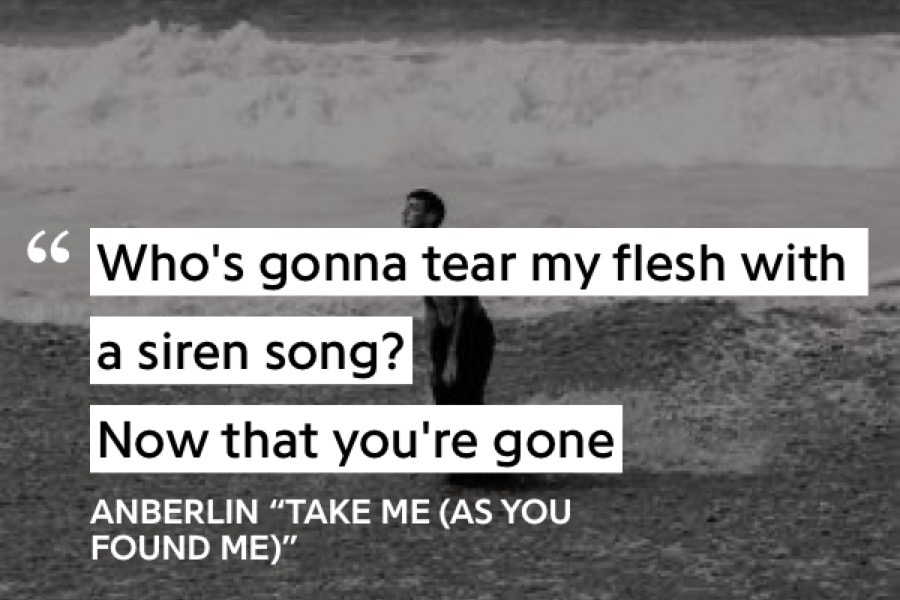
Before their hiatus in 2014, Anberlin had two summer acoustic tours. From the first tour, this live version was recorded in Brooklyn. Stephen Christian‘s live vocals have not always been on-point; however, slowing songs down didn’t defeat the intensity of Anberlin, instead, the songs focus on ambiance and Stephen’s vocals. This song, which got some time in the band’s setlist when Dark Is the Way, Light Is a Placewas released never got the love the band expected. I remember hearing an interview with Stephen in which he said he thought that this song would put them on the map.My criticism of that was the lyrics of this song were not clear. Who or what is it about? Anberlin from Never Take Friendship Personalto New Surrender lyrically may have been cryptic, however, listeners could figure it out.
Criticism aside, listeners can get lost in Stephen’s vocals in this concert and this track starts us out right. Stephen doesn’t shy away from the raspy, and he uses a vocal technique he said in the Cities livestream More to Living Than Being Alive, that it’s a vocal technique he learned from the lead singer of The Juliana Theory.
What Does This Song Mean To Me?: Authenticity is everything. The Christianity of my young adult life was all about “keeping your nose clean,” as my music teacher once instructed me. It caused a lot of anxiety as it made me think that I had to be “all things to all people.” The damage that this did was that I lost myself in this ultraconservative alter-ego. As I get older, I feel I shed more and more of the weight of expectations put onto me. It’s truly the blessing of getting older caring less and less about what other people think about you. What I come to find is the need for people who “take me as [they] find me.”
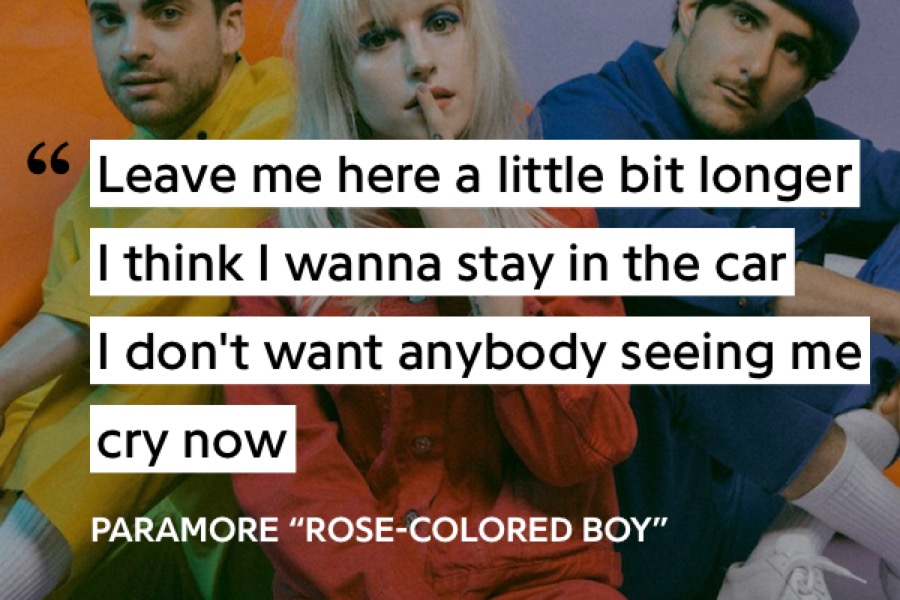
I referenced this song last week when I talked about how the songs on this album illustrate complicated emotions that many songwriters can’t describe. “Rose- Colored Boy” epitomizes the times that you want to be alone, you want to let the emotion out, but some obligation is in the way and you have to keep it together. What’s worse is a person close to you is trying everything to get you to keep it together just a little longer. However, humans have to process the dark and ugly at some point. And it never falls on someone else’s schedule. What you don’t want to hear in those moments is an optimist’s cliche. You don’t feel like laughing. You don’t feel like smiling and nodding anymore. This person is close to you, and they need to see you at your worst. Well, watch out Rosie!
I JUST KILLED OFF WHAT’S LEFT OF THE OPTIMIST IN ME. Take a moment to read the poem by Ogden Nash, “The Outcome of Mr. MacLeod’s Optimism,” and you’ll find yourself siding with Mrs. MacLeod. Optimism can be downright annoying when you need to vent. Whereas Nash humorously encapsulates the demise of the “Rose-Colored” husband, I think this song, with its contradicting upbeat sound music and its introverted lyrics, captures what Nash is talking about in a way that feels more at the moment. There are several situations that this song brings to mind. The first is being a teacher, dealing with school administration on break times between classes. There have been many times that I’ve had to leave meetings so angry with admin, but I had to put on a smile and go teach a class. I’ve seen my coworkers do similar things, dealing with phone calls from home and situations that they have to cool down from and go to class, pretending that the kids are all that matter. Adulthood is all about compartmentalizing.
DON’T MAKE ME LAUGH, I’LL CHOKE. Another thing this song reminds me of is being in love with someone who goes through extended periods of depression. I talked about the pressure in Korean culture on Sunday. When you are in love with someone who is reaching for their dreams, but it is uncertain that they will succeed, you want to be encouraging. How do you encourage that person? How are you there for that person? What words do you say? The optimistic answer is the wrong one. It just makes them resentful. Then the darkness starts to take over you. Your happiness starts to fade too. Your attacks with optimism are now meant for you to keep a little of the dying sunlight so that you don’t get trapped in a vast barren darkness together with the person you love. Fortunately, 2019 worked itself out and the dream was reached. I do wonder if the darkness will ever show his face again. How can we deal with it? What have learned from the first, second, and third times?
Green Day is one of the most influential bands to the bands that I like. Most influential music stays in the past; however, with their release of American Idiot, a concept album or punk rock opera about a teenager dealing with American life, Green Day saw new heights in their career. “Boulevard of Broken Dreams” was the band’s biggest hit, and this album transformed the punk rock trio into something more versatile than the same three chords indicative of the genre. American Idiot was the quintessential album to have in your collection when I was in high school, and “Boulevard” was one of the coolest pop song on the radio. So sticking with the theme of emotional turbulence, I nominate this song for the day as it unleashes my high school memories.
DON’T KNOW WHERE IT GOES. If The Beatles are the first day of school of rock music, Green Day is rock’s retirement party. Seriously, if you check out YouTube nostalgia lists of top songs of the year, “Boulevard of Broken Dreams” is close to one of the last ones played. Sure, you have Coldplay and Imagine Dragons, but Green Day is one of the last groups that adheres to the traditional rock sound of electric guitars, bass, and drums. Yet while the genre may be aging, when I look back at this album, it still rings true lyrically. As I’ve said before, I bought into Republican arguments when I was in high school, so I had a love-hate relationship with this album. On the one hand, the album was an obvious jab at American Idol, which was still a successful reality show. It was clearly satirical and used metaphor to address real issues in my teenage world. America was spending so much money in a war that seemed hopeless, even to many conservatives. George W. Bush had garnered so much disrespect around the world, and every year a little bit more of the Republican narrative was becoming harder to believe. Yet, this album was a clear attack by the liberals trying to make our society more and more Godless, I thought. I grew annoyed with the liberal media attacking traditional values. How dare Coldplay’s Chris Martin stand up at the Grammy’s and say “May your next president be John Kerry.” You’re not American, so stop influencing our elections. That was my thought back then.
READ BETWEEN THE LINES. Everyone agrees that America is messed up. The problem is no one can agree what is messed up about it. Living abroad makes me look at my conservative ideas that I got from my upbringing and shake my head. I’ve seen too many American idiocies, and I have to explain them to my students. And then there’s the shame of being a cultural ambassador for my country that was lead by a bigot who openly only cares about how much money he can extort from the country I live in. I get a little nauseous whenever I meet American Idiots living abroad, who spout racism and have no empathy for those seeking a better life in my country, which was supposed to be the country of immigrants. If you meet too many American idiots, the natural progression is to wander the Boulevard of Broken Dreams. And it does feel lonely, like the world has gone crazy or you have. Still, I feel a little guilty after how I dismissed Chris Martin’s speech in high school. I don’t live there. Why should I have an opinion?
March can take a rainy day and turn it into a snowy night. Waking up to a wet and white world on the first day of school, the day was filled with uncertainties. The first day of school is always a game of catch up, trying to figure out what is going on from others who may or may not know what is going on. As the mild winter took a turn for the cold, the mystery of the weather reminded me that anything could happen in the classroom. Whenever skies look clear and blue, a thunderstorm can be lurking in the principal’s office. Just like snow storms, headaches can come out of nowhere. Particularly when the stifling heat of the office meets contentions with unfavorable schedules to be sorted. And while today there were no classes, the doppler radar looks like an active storm season begins tomorrow.
IT’S NOT LIKE YOU WOULD KNOW, WOULD YOU? Christian metal core band Haste the Day has had their hits and misses for me. My first exposure to them was their Pressure the Hinges album, which had a few bangers. Later I discovered their first album’s cover of Goo Goo Dolls’ “Long Way Down.” The follow up to PtH slipped by me and then this single hit me. The album cover added layers to this song. The title of the album is Attack of the Wolf King, and if you take this song as part of the album’s concept, you start to feel very cold. The lyrics that draw on the crucifixion of Christ, but there also seems to be something medieval or maybe post-apocalyptic suggested in the lyrics and music. The song seems simple enough with the theme of Christ’s atonement, but the album title left me wondering. Who is the wolf king?
I’VE WALKED WITH THE KINGS. Biblical context tells us to beware of wolves in sheep’s clothing (Matt 7:15), or false teachers who lead followers astray. So to most people who are aware of this metaphor would interpret it through the teachings of Jesus that wolves are wise and destructive to the kingdom of heaven. HOWEVER, when I watched the Netflix limited series The Family, the story tells how Doug Coe’s teaching influenced evangelicals to embrace THE WOLF KING, a leader who uses brute force to push his will. Coe taught that it was the the Christian’s job to flirt with the Wolf King in order to establish a relationship to accomplish two goals. The first of which is to keep Christianity safe from the Wolf King, avoiding pre-Constantine Roman-like persecution. But Phase II is insidious. Use the Wolf King to persecute non-Christians, making it uncomfortable for anyone who doesn’t subscribe to this form of Christianity. Whether or not Doug Coe’s tactics will work in an evermore secular world is yet to be seen. However, we’ve seen five years of Evangelicals embracing the Wolf King rather than the lamb, white as snow.
When March comes, it either appears as a lion or a lamb. It’s been a mild winter where I live and today there’s a light spring shower. Later the rains are supposed to get harder. Is this the lion? Or is it a lamb? I’ve also taken a more superstitious meaning to this saying. In Korea, it’s the beginning of the school year; however, March 1st is a national holiday. Will the school year start out smoothly or with its own set of thundershowers? If it starts out smoothly, is trouble ahead? Think about last year. Covid Cases increased at the beginning of the month and started to drop slightly by the end of the month as social distancing measures were put in place. However, the month began in fear and ended in existential crisis. So much uncertainty leans on this temperamental spring month as the air warms, clashing with Arctic blasts. And if you throw climate change into the mix, who knows what we’re going to get? From the Texas snowstorms to the warmest February on record in Australia, it’s getting harder to be shocked by how the earth is groaning.
WHEN I GET FARTHER AWAY, MY SIGHS GROW DEEPER.Taeyeon is one of the most successful female solo artists in Korea. From her start with the bubblegum pop girl group Girls’ Generation, she’s not the only singer to find success after the ending of her group. In 2019, Taeyeon bravely explained to her fans that she was battling depression. She had lost many fellow friends and colleagues to suicide in the years prior as many K-pop group members took their lives. Taeyeon’s admission that she too was battling depression broke rank with her training as a K-pop idol, which involves years of cultivating young stars’ images. K-pop singers have to be branded to appear fun and flirty, but innocent. They shouldn’t take stands in controversies. Lyrics also shouldn’t be controversial. And while American pop music gets political and deals with issues like sexism, homophobia, and depression, sad songs in K-pop tend to deal only with the sadness of a break-up, like the lyrics of this song.
I CALL YOUR NAME, BUT THERE’S NO ANSWER. Looking at the bigger picture, Taeyeon’s revelations of her battle with depression has the potential to start a long overdue conversation on the topic of suicide in Korean society. As of 2016, the World Health Organization listed South Korea as the 10th highest suicide rate in the OECD. In a country with some of the best, affordable healthcare in the world, a cut-throat world of competition is often the culprit leading teens and adults to take their own lives. Teenagers face pressure to do well on a single test to enter university. How they score on that test determines what opportunities they will have in the future. Will they live the Korean or American dream? Own a nice apartment in Gangnam, work for Samsung, and marry a beautiful or handsome spouse and have 1.5 children? Or will they be stuck in a small town delivering chicken to the ones who scored better on this test? The world of K-pop is also fiercely competitive. So many kids want to be a K-pop singer, but not all of them have the look. So mom and dad spend money on plastic surgery and put them on diets. K-pop stars train for their late teens and early ’20s for a future that’s not certain. Not every group makes it big. And only the wildly successful SHINees and GIRLS’ GENERATIONs can maintain fame into their 30s. Most stars will age out of music. And while depression is not an easy topic to talk about or listen to, it’s important to drop the facade that everything is okay, before it’s too late.
If you struggle with depression, talk to a trained specialist in your country. Seoul Counseling Center offers counseling in Korean and English and is located in Seoul and Pyeongtaek, South Korea. Also, checkout the crisis hotlines.
One rainy day in March 2005, I saw Acceptance‘s Phantomsin Walmart’s Pop/Rock section. I picked up the album and wondered who this band was. I looked at the back and saw the track listing. There was a song titled “This Conversation Is Over,” which was the same name as one of the songs on The Sims 2 University expansion pack. Could it be the same group? I rarely bought albums without listening to them first. That’s why I have so many Christian Rock albums. The Family Christian Store had a sample CD for almost every album sold in their stores. However, albums sold in major retailers might let you preview a few of the songs. I don’t think the preview was available for this album. Nevertheless, I bought this album and put it into the fickle CD player in my 1991 Toyota Corolla. Immediately it became one of the most played albums of the next two years along with Anberlin’s Never Take Friendship Personal, Falling Up’s Crashings and Dawn Escapes, Day of Fire’s self-titled, and Mozart’s Requiem.
HONESTY WAITS HERE FOREVER. The music you listen to as a teenager to your early twenties is the most impactful. If you listened to music of your time, there’s something of a big-brother factor (not the Orwellian kind) about these bands that are just a few years older than you, making music that’s now considered cool by other like-minded people. Then put that teenager behind the wheel of his first car, send him off to the store, or make him tote his younger siblings around. This was the American spirit of freedom the founding fathers had no idea about. I love that music is so accessible now. I pay $11 a month and have access to millions of songs. But I spent a lot more than $11 every month on maybe three albums at most. I didn’t listen to as many songs as I do now, but I listened to music a lot more often. Music was everything. Albums were meant to be listened to with minimal skips. Sure sometimes you just want to play the hits, but for long rides between the town where you take your little sister to school and the town where you go to school, there’s a lot of time to listen to the full album. Albums like Phantoms were great because you didn’t have to skip a track.
COLD AND WIRED. One of the reasons this album stayed in my usual rotation from Junior to Senior year is that it’s both seasonal and year-round. The album was released in late February and I discovered it in March. Many of the early tracks on the album have a springtime sound. These songs are more piano-driven, but by the middle of the album, it turns more into a rock record (summer?). Then songs like “In the Cold” and “Breathless” feel autumny. The final track, “Glory/Us” is the coldest track on the album, perfect for winter. The lyrics of this song deal with the ending of something that immediately leads to a rebuilding. Jason Vena’s vocals, the band’s instrumentation, and Aaron Sprinkle’s production make this a beautiful and hopeful ballad, ending a cult-favorite album for a band that was ultimately cursed by the music industry. The band broke up in August of 2005 following Columbia pulling the initial release from the stores due to a spyware issue with the CD enhancements. Band members went their separate ways. Vena appeared on some tracks, but left the music industry. The other members joined other projects, notably Christian McAlhaney joined Anberlin, giving them a bit of an Acceptance sound from New Surrender on. Because of the cult-success of this record, the band got back together in 2015, though not in a full-time capacity.
Back to Cornerstone, either 2007 or 2008. One dusty afternoon we found ourselves in a tent to see a surprise competition. Like most music festivals, there were different tiers of bands bands playing. At Cornerstone there were groups like Skillet, Flyleaf, Switchfoot, and Relient K who would frequent the main stage. However, small groups like The Wedding played in tents. Every year friends attending made their schedules–the must bands, the bands you may have heard on the radio, the ones with cool names or pictures or bios. So one of The Wedding’s shows made our list. I had heard their songs from their first self-titled album on RadioU. Songs like “Morning Air, “Wake the Regiment,” and “Move This City.” I thought of them as the Fall Out Boy of Christian music.
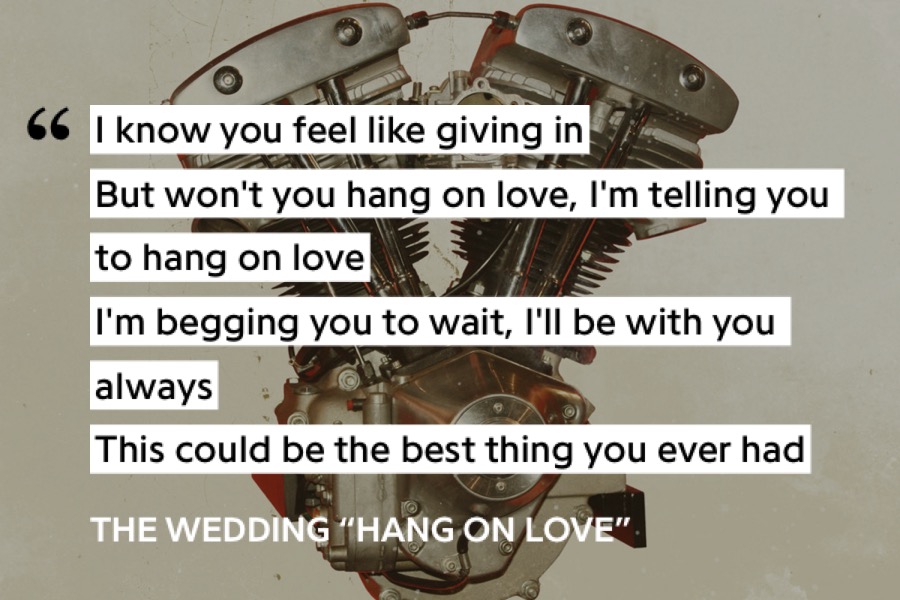
I’M BEGGING YOU TO STAY. It was quite interesting to say the least. The Wedding and another band Wavorly, had been on the schedule at least three times each. The two bands decided to hold a competition to see which was the better band. They would each play four of the other bands songs and whichever band was cheered the loudest would play one of their own songs as an encore. I think Wavorly won the competition, but as a newcomer to both bands, the competition was confusing. My friend bought The Wedding’s CD, and I bought Wavorly’s album. On the way back from Cornerstone we listened to both bands back to back. We discovered that Wavorly’s music and lyrics were a little bland. The Wedding’s album had better songs but they weren’t as musically interesting as when they played Wavorly. The Wedding seemed to give more life to Wavorly’s music. The Wedding stuck around for a while. They went on hiatus and then they came back, reforming on Tooth & Nail Records. They released an EP and the LP which contains the song of the day, No Direction. The band never saw the levels of success of the bands they opened for.
THIS COULD BE THE BEST WE’VE EVER HAD. I discovered this song last year. Ask any teacher about how they’re handling the COVID 19 pandemic, and you’ll probably get a rant you’ve never wanted to hear. I’ll spare you that for another day. Needless to say, I was quite discouraged. Work had little reward. I thought about changing careers every day. I felt like giving up and just collecting a paycheck. Motivation was a daily struggle. If it was like that for me, just think about students. A greater percentage of students used the class time for phone games and they lacked any forward thinking for after the pandemic. As far as we know, college applications would still exist as would jobs in some form. Next week the school year begins in South Korea. “If you’re tired love rest your head,” but next month we go to war against apathy. Hang on!
2017’s After Laughteris arguably the best Paramore record both lyrically and musically. Musically, it’s a pop album borrowing synths from the ’80s, interesting drum arrangement, and some pensive guitars here and there. And although most songs are in major keys, lead singer and lyricist Haley Williams masterfully disguises some of the band’s most difficult with smiles and summer vibes. The most telling track is “Fake Happy,” but also songs like “Pool” and “Rose-Colored Boy” show this beautiful confusion of being the life of the party and dealing with other things inside. The name of the album itself is telling. Williams explains that the meaning is the expression the faces of a room full of people stop laughing. Smiles start to fade, maybe some tears are wiped away. While you may debate whether this band fits into their emo punk rock sound, the lyrics are an unadulterated emotional roller coaster.
I CAN’T CALL YOU A STRANGER, BUT I CAN’T CALL YOU. Winter days are the time for last tracks of the album. Cold days in doors with instrumentals make you reflect on life and relationships. This piano ballad doesn’t pretend to be happy, like most of the rest of the album. With lyrics that reference the lawsuits and turmoil that the band had been through as well as the personal cost of losing friendships over differences of opinions, Williams speaks her truth, and it’s a story that’s all too relatable. I wrote about the Paramore controversy last month, but the song that I had chosen was before the great disagreement and the lawsuits took place. This song is the last song on the latest (possibly last) Paramore record, which is basically a war story. The contributors at Genius Lyrics do a great job breaking down the lyrics of this song with quotes from both parties. When a relationship sours, there’s no real healing.
YOU MAY HATE ME, BUT I CAN’T HATE YOU. “Therefore, if you are offering your gift at the altar and there remember that your brother or sister has something against you, leave your gift there in front of the altar. First go and be reconciled to them; then come and offer your gift” (Matthew 5:23-23). This song reminds me of a sermon I heard growing up based on this passage. The pastor said that if you can’t settle your disagreement, you are not ready for heaven. This bothered me to the core. What was even more disturbing was that the people who agreed with this message the most had a blindspot for resenting a neighbor or family member. I want to live as a peacemaker, but sides in a disagreement can’t always be glossed over. Sometimes the reconciliation with a brother or sister takes years and the sacrifice sits at the altar for years. “I’ve got my convictions, [and you’ve got yours]… and no one’s winning. Tell me how I’m supposed to feel about you now?” The outro ends the song with some hope, as if Williams comes to a moment of realization that friends don’t have to make up, but that letting go of the hard feeling is freeing.
Apple Music now has endless music after the album, song, or playlist you were listening to has ended, the algorithm will suggest songs you might like. After a Shawn Mendes single, Apple suggested a track from Taylor Swift’s Folklore and then this song. I had never heard of James Arthur, but the song reminded me of moments in my long distance relationship and about a time early in my relationship when we got food poisoning from some bad chicken. The song had a sweet, This Is Us kind of feeling to it, so I thought that might be a nice thing to write about today. But, as another part of my project is research, I wanted to know about the artist, and what I found didn’t feel so touchy feely, but something nonetheless that I have wanted to process since I’ve started writing again.
WE’RE FALLIN’ LIKE THE STARS. I’ve been wondering these days about cancel culture. What causes a stumble and what causes a fall? How can we know the difference? And finally, how do we deal with problematic trailblazers, acknowledging cultural significance, but critiquing the underlying issues? James Arthur was the winner of Britain’s X Factor. He had a background in Alternative Rock, Pop, and Hip Hop, and seemed to be ready for his fifteen minutes of fame, but hit a bit of controversy. After he released his 2013 debut, he released a diss track which included a homophobic slur, and a hip hop project which included violent lyrics. So many people were outraged with Arthur that iTunes even refunded money for the purchased album. This caused Arthur to be dropped by his record label. As I read this story, I thought that if this had happened today. Not only had the artist offended his fans, he cost the music industry money.
AND I’M NOT SCARED TO SAY THOSE WORDS. Today, I found out that one of my former colleagues was blocked from Facebook for spreading fake news. This is not at all surprising, and if anyone was a candidate for Facebook censure, it would be this guy. We live in a world for very loud talking heads right now, and false information shouldn’t be used on any side in this war of words. James Arthur was able to repair his career with apologies and time to distance himself from the dumb decisions he made musically. But this got me thinking about the problematic songs that graced the Top 40 as little as ten years ago. Robin Thicke’s “Blurred Lines” slide under the door just before the #MeToo movement. I’m cringing remembering 30h3!’s song “Don’t Trust Me,” and come to think of it, the whole album is pretty toxic. And although it wasn’t a single, we should remember on Katy Perry’s first album she calls out a boyfriend who is “so gay [but doesn’t] even like boys.” In the age of so-called “Cancel Culture,” I wonder what we are supposed to do with our past. Do we memorialize it? Do we act like it never happened? Do we apologize for it? I certainly don’t want someone to find my old beliefs, copy them from MySpace, and post them on Twitter. Then there’s television. Disney+ just released The Muppet Show with a content warning, explaining that some of the humor might make people uncomfortable. They also pulled two episodes which had content that they found to be unacceptable for release. But I wonder, should that content be available? If not on Disney+, then somewhere? How are we ever going to analyze the past if we keep burning the primary documents on which our history books are based. Let’s proceed with caution, shall we?
There is little that my parents agree on musically, but one thing they DO agree on is that whenever Bruce Springsteen comes on the radio, they change the station. For years, all I knew from Springsteen was “Born in the USA,” and the song didn’t resonate with me, so I too passed on The Boss. But when I watched Philadelphia, I heard a different side of Springsteen. Yes, the smokey voice was slightly off-putting in other songs, but how it met with the keys and faint lead guitar, and coalescing with the lyrics to created an emotional and spiritual experience. Last year, I listened to his song “I’m on Fire,” a lot. Though somewhat problematic, Springsteen masterfully uses imagery to transport the listener into the experience. Last year when I was returning to Korea just before the pandemic, I watched several movies on the plane. Two of them stuck out. The first was Where’s My Roy Cohn, the story of Trump’s villainous lawyer who died in the mid-80s of AIDS. The other movie was Blinded By the Light, a true story about how the lyrics of Bruce Springsteen helped two teenagers reconcile the tensions between their South Asian family-life upbringings and Western culture. Bruce Springsteen’s lyrics have been influential on many of the musicians I listen to. Could my parents have been wrong?
I WAS UNRECOGNIZABLE TO MYSELF. I grew up in an Adventures-in-Odyssey-listening home. My mom would also listen to Focus on the Family with James Dobson. Adventures in Odyssey is a radio drama produced by Focus on the Family. The aim of the foundation is to instill conservative Christian values in children and adults. Adventures in Odyssey was so well dramatized with professional voice actors who worked for Disney and even The Simpsons. Sound production was also great. I still can see the characters and places I imagined from the show. But I didn’t realize how indoctrinated I had become with a very particular interpretation of scripture. Topics ranged from Bible stories to history lessons (slanted to the right) to learning how to obey your parents or teachers. But they also dealt with prayer in school, divorce, evolution, role playing games, the occult, and too many others to name. One special episode even dealt with abortion. As I grew up, I learned what Focus on the Family was teaching parents. Adventures in Odyssey dealt with issues from children’s perspectives. Children have no control over if their parents get divorced. However, Dobson used the adult program to fuel the culture war. Hollywood and secularism were winning, and issues of abortion, homosexuality, and the removal of God from public schools were the program’s bread and butter.
AIN’T NO ANGEL GONNA GREET ME. Philadelphia is named after the ancient city located in present day Turkey. The name means, “brotherly love,” coming from phileo which is one of the Greek words for love. However, the AIDS crisis was not about brotherly love. President Reagan treated the epidemic with silence. As more and more kept dying, the epidemic struck closer to home. Celebrities, gay men, women and children who received blood transfusions–anyone could be a victim of the virus. AIDS which had been something only heard about on TV was impacting real people. Hollywood responded slowly, too. However, 1993’s Philadelphia, humanized AIDS for many Americans. America’s most beloved actor, Tom Hanks, portrayed a gay man dying of AIDS who sues his place of employment over unlawful termination. Despite Hanks’s powerful onscreen portrayal, the religious right continued to fire back, doubling down, calling the plague “God’s punishment.” And 40 years removed from the start of the AIDS epidemic, I cannot hear the voice of Christ in all the noise. The media showed us the cries of suffering of millions of people who died alone. I hear the blaring silence of the countless dead who cannot speak for themselves. I hear the voice of the accuser, the Biblical Satan, who speaks like a Pharisee in the New Testament. The AIDS crisis was a failure of brotherly love. The church turned a cold shoulder to the down-and-out. Few Christian singers would touch this demographic to show radical love to the world. But Springsteen, Hanks, and Washington showed Jesus to “The Streets of Philadelphia.”




 Mixtapemotions